Martin Bell11 Min Read
10 Landing Page MVP Examples for Startup Validation (2026)
A 2026 library of landing page MVP formats that test demand, positioning, pricing, and buyer commitment.
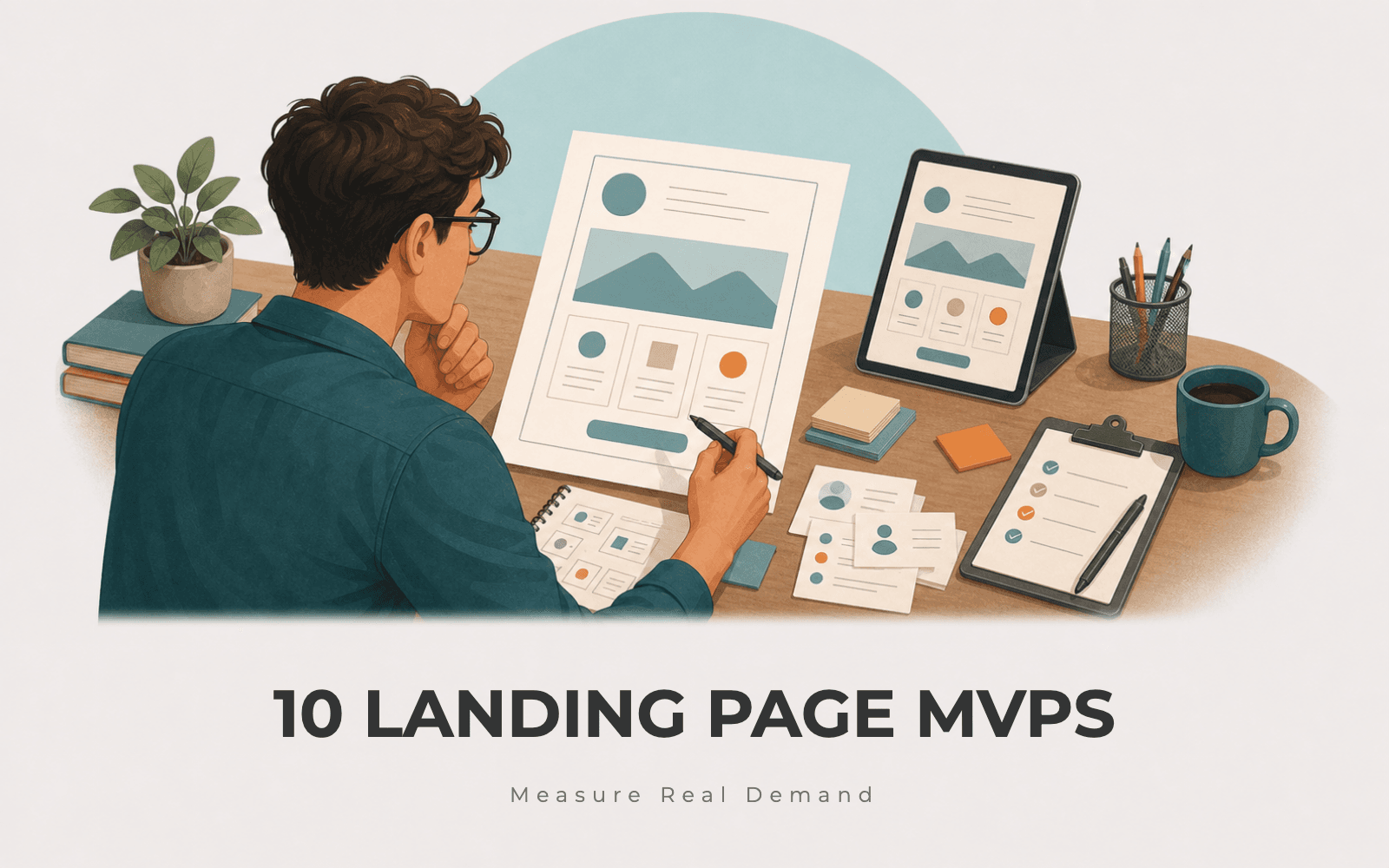
A landing page MVP is not a website project. It is a measurement tool. The page should test whether a specific customer understands the promise and is willing to take a meaningful next step.
In 2026, founders can create pages quickly. That speed is useful only if the page asks for a real signal: book a call, join a waitlist, pay a deposit, request an audit, submit data, or start a pilot.
The examples below show different page formats and what each one actually validates.
Key Takeaways
-
A landing page MVP should test one customer, one promise, and one action.
-
Traffic quality matters more than traffic volume.
-
A weak call to action creates weak learning.
-
Pair page analytics with customer conversations.
-
Do not overdesign before the message is clear.
What a Landing Page MVP Should Include
Keep the page simple: customer, painful moment, promised outcome, how it works, proof or reason to believe, risk reversal, and one call to action.
Before publishing, decide what the page is testing. Is it the customer segment, the problem language, the offer, the price, or the channel? A page that tests everything teaches very little.
After the test, read both the numbers and the replies. A low conversion rate with detailed objections can be more useful than shallow signups from the wrong audience.
1. Waitlist Page
This idea serves buyers interested in a future product but not ready or able to buy yet. The promise is to explain the problem and invite people to join for early access. That matters because the customer is not buying an abstract tool or a clever business model. They are buying a cleaner version of a painful job they already recognize.
The first version should stay deliberately small: send targeted traffic from outreach or communities and ask one qualifying question at signup. Use AI where it helps with research, drafting, sorting, or summarizing, but keep human judgment in the final delivery. Early customers are paying for a useful result, not for unreviewed output.
The validation signal is that qualified users join and explain why they want the product. If that signal appears more than once, you can improve the package, write the delivery checklist, and decide whether the offer should become a productized service, template, or software wedge.
Avoid counting unqualified email addresses as demand. That mistake makes the business look larger while making the actual learning weaker.
2. Paid Pilot Page
This idea serves business buyers with a problem urgent enough to test now. The promise is to offer a limited pilot with clear outcome, timeframe, and price. That matters because the customer is not buying an abstract tool or a clever business model. They are buying a cleaner version of a painful job they already recognize.
The first version should stay deliberately small: publish the pilot page and send it to a small targeted prospect list. Use AI where it helps with research, drafting, sorting, or summarizing, but keep human judgment in the final delivery. Early customers are paying for a useful result, not for unreviewed output.
The validation signal is that prospects book calls or pay for the pilot. If that signal appears more than once, you can improve the package, write the delivery checklist, and decide whether the offer should become a productized service, template, or software wedge.
Avoid using a free pilot when the real risk is willingness to pay. That mistake makes the business look larger while making the actual learning weaker.
3. Preorder Page
This idea serves buyers who can evaluate the promise before the full product exists. The promise is to invite commitment for a future product with clear delivery expectations. That matters because the customer is not buying an abstract tool or a clever business model. They are buying a cleaner version of a painful job they already recognize.
The first version should stay deliberately small: collect payment or deposit only when you can honestly deliver the promised first version. Use AI where it helps with research, drafting, sorting, or summarizing, but keep human judgment in the final delivery. Early customers are paying for a useful result, not for unreviewed output.
The validation signal is that customers pay before the full build because the outcome matters. If that signal appears more than once, you can improve the package, write the delivery checklist, and decide whether the offer should become a productized service, template, or software wedge.
Avoid taking money without a realistic delivery plan or clear terms. That mistake makes the business look larger while making the actual learning weaker.
4. Calculator Page
This idea serves buyers who need to estimate cost, savings, risk, or effort. The promise is to help the visitor calculate a decision and reveal the value gap. That matters because the customer is not buying an abstract tool or a clever business model. They are buying a cleaner version of a painful job they already recognize.
The first version should stay deliberately small: build a simple calculator or worksheet and offer a follow-up review. Use AI where it helps with research, drafting, sorting, or summarizing, but keep human judgment in the final delivery. Early customers are paying for a useful result, not for unreviewed output.
The validation signal is that visitors complete it, share inputs, or request help interpreting results. If that signal appears more than once, you can improve the package, write the delivery checklist, and decide whether the offer should become a productized service, template, or software wedge.
Avoid creating a fun calculator disconnected from a buying decision. That mistake makes the business look larger while making the actual learning weaker.
5. Demo Video Page
This idea serves buyers who need to see the workflow before they understand the product. The promise is to show the product behavior without requiring a full working backend. That matters because the customer is not buying an abstract tool or a clever business model. They are buying a cleaner version of a painful job they already recognize.
The first version should stay deliberately small: record a realistic walkthrough of the intended workflow and ask viewers to book a pilot. Use AI where it helps with research, drafting, sorting, or summarizing, but keep human judgment in the final delivery. Early customers are paying for a useful result, not for unreviewed output.
The validation signal is that viewers ask about implementation, pricing, or access. If that signal appears more than once, you can improve the package, write the delivery checklist, and decide whether the offer should become a productized service, template, or software wedge.
Avoid a slick demo that hides unsolved workflow questions. That mistake makes the business look larger while making the actual learning weaker.
6. Comparison Page
This idea serves buyers switching from a known workaround, tool, agency, or spreadsheet. The promise is to explain when your approach is better and when it is not. That matters because the customer is not buying an abstract tool or a clever business model. They are buying a cleaner version of a painful job they already recognize.
The first version should stay deliberately small: compare against the current workaround honestly and ask for a consult or trial. Use AI where it helps with research, drafting, sorting, or summarizing, but keep human judgment in the final delivery. Early customers are paying for a useful result, not for unreviewed output.
The validation signal is that visitors identify with the tradeoff and choose a next step. If that signal appears more than once, you can improve the package, write the delivery checklist, and decide whether the offer should become a productized service, template, or software wedge.
Avoid attacking competitors instead of clarifying fit. That mistake makes the business look larger while making the actual learning weaker.
7. Audit Offer Page
This idea serves businesses that need expert diagnosis before buying a product. The promise is to offer a small audit that reveals the problem and next steps. That matters because the customer is not buying an abstract tool or a clever business model. They are buying a cleaner version of a painful job they already recognize.
The first version should stay deliberately small: sell or book a fixed-scope audit tied to the product category. Use AI where it helps with research, drafting, sorting, or summarizing, but keep human judgment in the final delivery. Early customers are paying for a useful result, not for unreviewed output.
The validation signal is that qualified prospects submit data and accept the audit process. If that signal appears more than once, you can improve the package, write the delivery checklist, and decide whether the offer should become a productized service, template, or software wedge.
Avoid free audits that attract people with no buying intent. That mistake makes the business look larger while making the actual learning weaker.
8. Template Download Page
This idea serves people trying to solve the problem manually today. The promise is to give a useful template while measuring who needs a deeper solution. That matters because the customer is not buying an abstract tool or a clever business model. They are buying a cleaner version of a painful job they already recognize.
The first version should stay deliberately small: offer the template and ask one question about the workflow during signup. Use AI where it helps with research, drafting, sorting, or summarizing, but keep human judgment in the final delivery. Early customers are paying for a useful result, not for unreviewed output.
The validation signal is that downloaders use the template and ask for help, examples, or automation. If that signal appears more than once, you can improve the package, write the delivery checklist, and decide whether the offer should become a productized service, template, or software wedge.
Avoid lead magnets that collect emails but reveal no customer intent. That mistake makes the business look larger while making the actual learning weaker.
9. Community Interest Page
This idea serves people who need peer learning, examples, or accountability around a problem. The promise is to invite a focused group around one repeated job, not a vague networking space. That matters because the customer is not buying an abstract tool or a clever business model. They are buying a cleaner version of a painful job they already recognize.
The first version should stay deliberately small: ask applicants about their problem and willingness to participate. Use AI where it helps with research, drafting, sorting, or summarizing, but keep human judgment in the final delivery. Early customers are paying for a useful result, not for unreviewed output.
The validation signal is that qualified people apply and contribute, not just join passively. If that signal appears more than once, you can improve the package, write the delivery checklist, and decide whether the offer should become a productized service, template, or software wedge.
Avoid building community as a substitute for a product or service hypothesis. That mistake makes the business look larger while making the actual learning weaker.
10. Concierge Signup Page
This idea serves buyers who want the outcome now even if the product is manual behind the scenes. The promise is to offer a hands-on first version of the future product. That matters because the customer is not buying an abstract tool or a clever business model. They are buying a cleaner version of a painful job they already recognize.
The first version should stay deliberately small: explain the result, collect the necessary input, and deliver manually. Use AI where it helps with research, drafting, sorting, or summarizing, but keep human judgment in the final delivery. Early customers are paying for a useful result, not for unreviewed output.
The validation signal is that customers accept the manual process and pay for the outcome. If that signal appears more than once, you can improve the package, write the delivery checklist, and decide whether the offer should become a productized service, template, or software wedge.
Avoid hiding human delivery in ways that damage trust or privacy. That mistake makes the business look larger while making the actual learning weaker.
The Page Is the Start of the Test
A landing page MVP does not validate anything by existing. It validates when the right people see it and take or refuse a meaningful action.
Choose the page format based on the risk. If price is the risk, test payment. If message clarity is the risk, test qualified replies. If workflow trust is the risk, test a pilot or concierge version.
The best landing page MVP creates the next learning task immediately. That is what keeps startup validation practical instead of decorative.

Martin Bell
Startup-building guidance from the 100 Tasks framework.