Martin Bell13 Min Read
Startup Checklist for First-Time Founders (2026)
A 2026 startup checklist for turning an idea into a validated offer, first customers, and a basic operating rhythm.
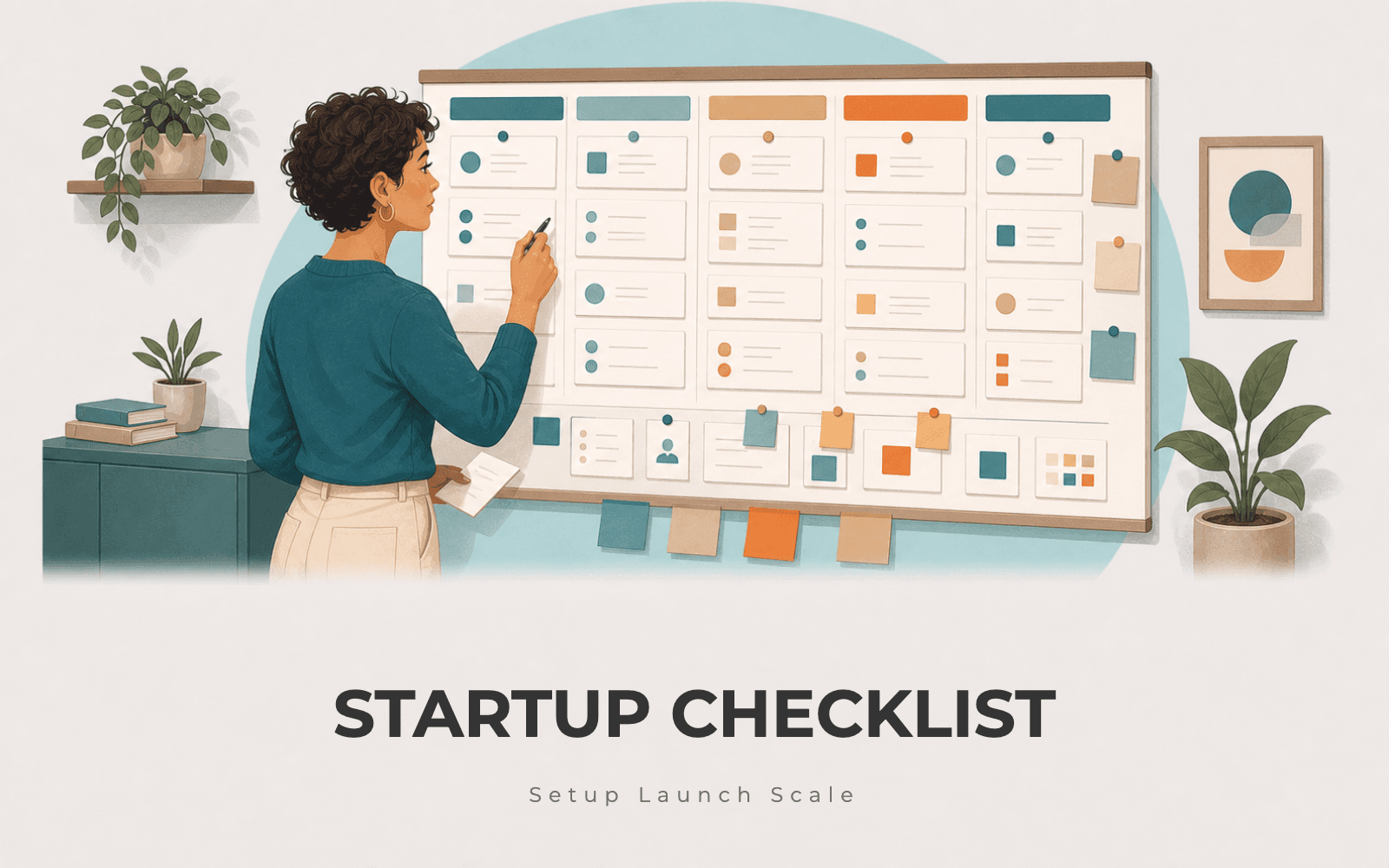
A first-time founder does not need more vague advice. They need a sequence. The early company is fragile because every task feels urgent, every idea feels possible, and every tool promises leverage.
A startup checklist is useful only when it connects actions to evidence. In 2026, AI can help you move faster through research, writing, prototyping, and operations, but it does not remove the need for order.
Use this checklist as a practical path from idea to first customers and basic operating rhythm.
Key Takeaways
-
Start with customer, problem, and evidence before branding or automation.
-
Build the smallest MVP that tests the riskiest assumption.
-
Create a first-customer system before chasing scale.
-
Set up basic money, legal, and operating habits early.
-
Review progress weekly so learning changes the plan.
How to Use This Startup Checklist
Work through the checklist in stages: setup, launch, and scale. You will revisit tasks as the company learns, but the order matters because each stage creates evidence for the next.
Do not treat every item as a full project. Many early tasks should create a simple artifact: a customer definition, interview notes, landing page, MVP plan, outreach list, pricing test, or weekly review.
The checklist should reduce founder chaos. If a task does not help you learn, sell, deliver, decide, or operate, it probably belongs later.
Clarify the Customer
The customer definition is the root of the startup. Without it, product, marketing, pricing, and outreach become vague.
This section is a gate, not a decoration. If the founder cannot complete it in plain language, the idea is probably still too vague for product, marketing, or fundraising work. Slow down here and turn the point into an artifact the company can reuse: a note, checklist, customer definition, scorecard, outreach list, weekly review prompt, or decision memo.
The practical move: Write a narrow segment with role, situation, trigger, and current workaround. Find real people or companies that match it. Make it concrete enough that someone else could inspect the work and understand what changed. If AI helps draft, summarize, or compare options, use it as a speed layer, then review the output against customer facts and founder judgment.
The signal to watch: You can source and contact matching customers this week.
When that signal appears, write down what it means for the next task. The point is not to collect a nice insight. The point is to decide whether to continue, narrow, change, sell, build, or stop.
Avoid starting with everyone who could use this someday.. The common failure mode is treating this as a planning exercise instead of a market-facing loop. Every section should make the next customer conversation, offer, MVP, or operating decision sharper.
Name the Painful Problem
A startup begins with a painful job, not a product feature list.
This section is a gate, not a decoration. If the founder cannot complete it in plain language, the idea is probably still too vague for product, marketing, or fundraising work. Slow down here and turn the point into an artifact the company can reuse: a note, checklist, customer definition, scorecard, outreach list, weekly review prompt, or decision memo.
The practical move: Describe the last moment when the problem happened, what broke, what it cost, and what the customer did instead. Make it concrete enough that someone else could inspect the work and understand what changed. If AI helps draft, summarize, or compare options, use it as a speed layer, then review the output against customer facts and founder judgment.
The signal to watch: Customers describe the problem without you feeding them the answer.
When that signal appears, write down what it means for the next task. The point is not to collect a nice insight. The point is to decide whether to continue, narrow, change, sell, build, or stop.
Avoid building around a category trend rather than a real workflow pain.. The common failure mode is treating this as a planning exercise instead of a market-facing loop. Every section should make the next customer conversation, offer, MVP, or operating decision sharper.
Interview Before You Pitch
Customer interviews should reveal behavior before you ask for approval of your solution.
This section is a gate, not a decoration. If the founder cannot complete it in plain language, the idea is probably still too vague for product, marketing, or fundraising work. Slow down here and turn the point into an artifact the company can reuse: a note, checklist, customer definition, scorecard, outreach list, weekly review prompt, or decision memo.
The practical move: Run five to ten interviews focused on recent events, workarounds, costs, and decision triggers. Make it concrete enough that someone else could inspect the work and understand what changed. If AI helps draft, summarize, or compare options, use it as a speed layer, then review the output against customer facts and founder judgment.
The signal to watch: You hear repeated language and specific stories across interviews.
When that signal appears, write down what it means for the next task. The point is not to collect a nice insight. The point is to decide whether to continue, narrow, change, sell, build, or stop.
Avoid asking would you use this and counting polite yeses as validation.. The common failure mode is treating this as a planning exercise instead of a market-facing loop. Every section should make the next customer conversation, offer, MVP, or operating decision sharper.
Choose the Riskiest Assumption
The first MVP should test what could kill the idea, not what is easiest to build.
This section is a gate, not a decoration. If the founder cannot complete it in plain language, the idea is probably still too vague for product, marketing, or fundraising work. Slow down here and turn the point into an artifact the company can reuse: a note, checklist, customer definition, scorecard, outreach list, weekly review prompt, or decision memo.
The practical move: List assumptions about pain, budget, trust, delivery, and frequency. Pick the riskiest one. Make it concrete enough that someone else could inspect the work and understand what changed. If AI helps draft, summarize, or compare options, use it as a speed layer, then review the output against customer facts and founder judgment.
The signal to watch: Your test can produce a clear yes, no, or change decision.
When that signal appears, write down what it means for the next task. The point is not to collect a nice insight. The point is to decide whether to continue, narrow, change, sell, build, or stop.
Avoid building a prototype that avoids the commercial risk.. The common failure mode is treating this as a planning exercise instead of a market-facing loop. Every section should make the next customer conversation, offer, MVP, or operating decision sharper.
Package a Small Offer
A small offer makes the idea concrete enough for a customer to react.
This section is a gate, not a decoration. If the founder cannot complete it in plain language, the idea is probably still too vague for product, marketing, or fundraising work. Slow down here and turn the point into an artifact the company can reuse: a note, checklist, customer definition, scorecard, outreach list, weekly review prompt, or decision memo.
The practical move: Write the outcome, who it is for, what is included, price or commitment, and next step. Make it concrete enough that someone else could inspect the work and understand what changed. If AI helps draft, summarize, or compare options, use it as a speed layer, then review the output against customer facts and founder judgment.
The signal to watch: A prospect understands the offer and can decide whether it fits.
When that signal appears, write down what it means for the next task. The point is not to collect a nice insight. The point is to decide whether to continue, narrow, change, sell, build, or stop.
Avoid describing the company vision when the buyer needs a first result.. The common failure mode is treating this as a planning exercise instead of a market-facing loop. Every section should make the next customer conversation, offer, MVP, or operating decision sharper.
Run a Manual MVP
Manual delivery teaches the workflow before software hides it.
This section is a gate, not a decoration. If the founder cannot complete it in plain language, the idea is probably still too vague for product, marketing, or fundraising work. Slow down here and turn the point into an artifact the company can reuse: a note, checklist, customer definition, scorecard, outreach list, weekly review prompt, or decision memo.
The practical move: Use a concierge, spreadsheet, landing page, pilot, or service sprint to deliver the outcome. Make it concrete enough that someone else could inspect the work and understand what changed. If AI helps draft, summarize, or compare options, use it as a speed layer, then review the output against customer facts and founder judgment.
The signal to watch: Customers pay, use the result, share data, or ask for more.
When that signal appears, write down what it means for the next task. The point is not to collect a nice insight. The point is to decide whether to continue, narrow, change, sell, build, or stop.
Avoid automating before you know which steps repeat.. The common failure mode is treating this as a planning exercise instead of a market-facing loop. Every section should make the next customer conversation, offer, MVP, or operating decision sharper.
Find the First Customers
Distribution starts early. A good product with no customer path is still stuck.
This section is a gate, not a decoration. If the founder cannot complete it in plain language, the idea is probably still too vague for product, marketing, or fundraising work. Slow down here and turn the point into an artifact the company can reuse: a note, checklist, customer definition, scorecard, outreach list, weekly review prompt, or decision memo.
The practical move: Create a prospect list, write relevant outreach, build one proof asset, and track replies. Make it concrete enough that someone else could inspect the work and understand what changed. If AI helps draft, summarize, or compare options, use it as a speed layer, then review the output against customer facts and founder judgment.
The signal to watch: You can repeatedly start qualified conversations.
When that signal appears, write down what it means for the next task. The point is not to collect a nice insight. The point is to decide whether to continue, narrow, change, sell, build, or stop.
Avoid waiting for organic demand before doing direct customer work.. The common failure mode is treating this as a planning exercise instead of a market-facing loop. Every section should make the next customer conversation, offer, MVP, or operating decision sharper.
Set Basic Money Rules
Founders do not need a complex finance stack on day one, but they do need visibility.
This section is a gate, not a decoration. If the founder cannot complete it in plain language, the idea is probably still too vague for product, marketing, or fundraising work. Slow down here and turn the point into an artifact the company can reuse: a note, checklist, customer definition, scorecard, outreach list, weekly review prompt, or decision memo.
The practical move: Track cash, runway, revenue, costs, pricing assumptions, and payment status in one simple place. Make it concrete enough that someone else could inspect the work and understand what changed. If AI helps draft, summarize, or compare options, use it as a speed layer, then review the output against customer facts and founder judgment.
The signal to watch: You can explain how long you can operate and what needs to happen next.
When that signal appears, write down what it means for the next task. The point is not to collect a nice insight. The point is to decide whether to continue, narrow, change, sell, build, or stop.
Avoid ignoring money because the product is still early.. The common failure mode is treating this as a planning exercise instead of a market-facing loop. Every section should make the next customer conversation, offer, MVP, or operating decision sharper.
Handle Basic Legal and Admin Boundaries
Entity, contracts, taxes, intellectual property, and compliance questions should be handled carefully and with qualified help when needed.
This section is a gate, not a decoration. If the founder cannot complete it in plain language, the idea is probably still too vague for product, marketing, or fundraising work. Slow down here and turn the point into an artifact the company can reuse: a note, checklist, customer definition, scorecard, outreach list, weekly review prompt, or decision memo.
The practical move: Identify the questions you need answered, gather documents, and speak to qualified professionals for legal or tax advice. Make it concrete enough that someone else could inspect the work and understand what changed. If AI helps draft, summarize, or compare options, use it as a speed layer, then review the output against customer facts and founder judgment.
The signal to watch: You know what must be decided now and what can wait.
When that signal appears, write down what it means for the next task. The point is not to collect a nice insight. The point is to decide whether to continue, narrow, change, sell, build, or stop.
Avoid treating internet checklists as legal advice.. The common failure mode is treating this as a planning exercise instead of a market-facing loop. Every section should make the next customer conversation, offer, MVP, or operating decision sharper.
Create a Weekly Founder Review
A startup improves when learning changes the next week of work.
This section is a gate, not a decoration. If the founder cannot complete it in plain language, the idea is probably still too vague for product, marketing, or fundraising work. Slow down here and turn the point into an artifact the company can reuse: a note, checklist, customer definition, scorecard, outreach list, weekly review prompt, or decision memo.
The practical move: Every week, review customer signals, sales activity, product learning, money, blockers, and the next three tasks. Make it concrete enough that someone else could inspect the work and understand what changed. If AI helps draft, summarize, or compare options, use it as a speed layer, then review the output against customer facts and founder judgment.
The signal to watch: You stop repeating vague effort and start making sharper decisions.
When that signal appears, write down what it means for the next task. The point is not to collect a nice insight. The point is to decide whether to continue, narrow, change, sell, build, or stop.
Avoid measuring activity without asking what changed.. The common failure mode is treating this as a planning exercise instead of a market-facing loop. Every section should make the next customer conversation, offer, MVP, or operating decision sharper.
The Checklist Should Create Momentum
A first-time founder does not need to complete every possible startup task before acting. They need the next right task in the right order.
Start with the customer, validate the problem, sell a small offer, deliver manually, learn, and set the operating rhythm. That sequence creates more useful evidence than months of planning.
100 Tasks AI turns that philosophy into an operating system: setup, launch, scale, with AI helping the founder move faster through work that still requires judgment.

Martin Bell
Startup-building guidance from the 100 Tasks framework.